Aquarium plants for beginners
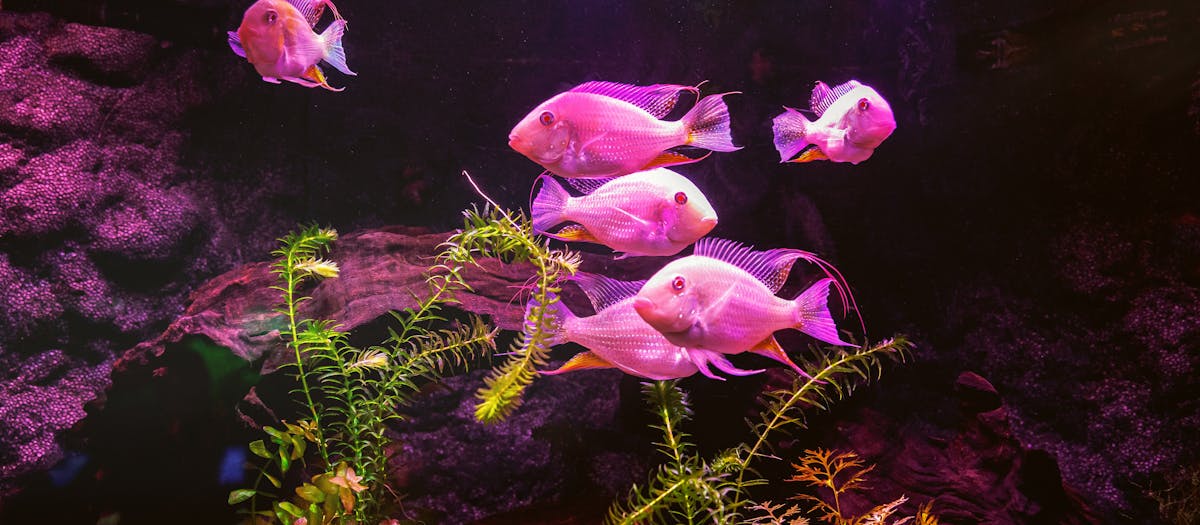
Picking plants is where most planted-tank beginners get burned — not because the plants are hard, but because the listings lie. Half the "easy" plants on a big-box store rack are bog-grown emersed plants that melt the first week, and the truly easy species are usually sold next to demanding stem plants with the same care label. This silo organises plants by species, by light level, and by how forgiving they actually are.
A heavily planted new tank grows plants. A sparsely planted new tank grows algae. The single best thing you can do for a first build is to over-plant from day one with a small list of forgiving species, then add the demanding ones once the tank has settled.
How to choose plants
Four questions decide your shortlist.
What is your light level?
- Low light (20–40 PAR at substrate) — Anubias, java fern, cryptocoryne, hornwort, vallisneria, amazon sword, water sprite. The forgiving end of the hobby.
- Medium light (40–80 PAR) — Stem plants (rotala, ludwigia, bacopa), Monte Carlo, dwarf hairgrass, bucephalandra, most carpets. CO2 strongly recommended above 50 PAR.
- High light (80+ PAR) — Red stem plants at saturation, demanding carpets, full Dutch-style stem walls. CO2 mandatory.
Are you injecting CO2?
- No CO2 — Stick to the low-light shortlist. Slow growth, low algae risk.
- Pressurised CO2 — Everything is open. Carpets, reds, the demanding stem plants.
How are you planting?
- Root in substrate — Cryptocoryne, swords, vallisneria, monte carlo, dwarf hairgrass. Need aquasoil or capped substrate plus root tabs.
- Attach to hardscape — Anubias, java fern, bucephalandra, moss. Tied or glued to driftwood or stone. Rhizome must stay above the substrate.
- Floating — Hornwort, water sprite (also plants), red root floater, frogbit. No planting required. Outcompete algae and provide shade.
What is the tank's water chemistry?
- Soft water (low GH/KH) — Most planted species thrive. Easier on cryptocoryne, neon tetras, and demanding stems.
- Hard water (high GH/KH) — Anubias, java fern, vallisneria, hornwort and amazon sword are happiest. Some delicate stems struggle.
Featured guides
The current published species guides. More land each batch.
Landing next: Java fern, Hornwort, Monte Carlo, Bucephalandra, Red root floater, Dwarf hairgrass, Cryptocoryne, and Amazon sword — the single-species shortlist.
The beginner shortlist (no CO2, low light)
If you remember nothing else, build a first tank from this list. Every species below tolerates low light, no CO2, and a moderate dose of beginner mistakes.
Anubias nana and Petite
The single most forgiving plant in the hobby. Broad green leaves, slow growth, lives on almost nothing. Attach to wood or stone — never bury the rhizome. The full anubias buyer and care guide walks through Nana, Petite, Coffeefolia and Barteri.
Java fern
Same rules as anubias — attach to hardscape, never bury the rhizome. Tolerates almost any water chemistry. Slow grower. Comes in Narrow Leaf, Trident, Windelov, and standard forms.
Cryptocoryne wendtii
Root-planted in substrate, loves root tabs. Almost always melts back on transition to a new tank — the leaves rot, the rhizome stays alive, and new growth emerges within a few weeks. Bronze, green, red and tropica variants give visual range.
Hornwort
Fast-growing stem or floating plant. Mops up nitrates faster than almost anything else and out-competes algae by sheer growth rate. Excellent first-month plant for a cycling tank.
Vallisneria
Tall background grass that spreads via runners. A few starter plants fill a 20-gallon back wall within two months. Tolerates hard water and low light better than most.
Amazon sword
Background centrepiece for tanks 29 gallons and up. Heavy root-feeder — root tabs every two to three months. Outgrows a 20-gallon long quickly, so size the tank to the plant.
What matters when you buy plants
The buying-side checklist that the listings skip.
Emersed-grown or submerged-grown
Most commercial plant suppliers grow plants emersed (out of water in greenhouses) because it is faster and cheaper. They look healthier in the bag but melt back hard when they go underwater. Submerged-grown plants from specialist suppliers cost more, transition with no melt, and are worth the difference for stems and carpets. Anubias and java fern are generally fine either way.
Snail and pest-algae risk
Wild-harvested plants and most online stock arrives with snail eggs or pest algae attached. A 1:19 bleach-to-water dip for 90 seconds, followed by a thorough rinse, kills almost everything. Anubias, java fern and bucephalandra tolerate it well. Carpet plants and delicate stems do not — quarantine those in a separate tank for two to three weeks instead.
Tissue-culture cups
Sterile, snail-free, often cheaper per stem. The trade-off is the plants are tiny and need a few weeks to settle. Good for carpets and bucephalandra. Less efficient for anubias and sword plants.
Where to buy
A specialist online aquarium plant retailer beats a big-box pet store for variety and health. Local fish-club swaps are even better — locally adapted plants, free or cheap, and a hobbyist who can answer questions. Avoid plants labelled "aquarium plant" that are actually terrestrial — peace lilies and dracaena are the most common bait-and-switch.
What we don't recommend
Carpet plants in a first tank
Monte Carlo, dwarf hairgrass and hemianthus look great in photos. They want medium-to-high light, CO2, and an established tank. A first build that tries to carpet usually has bare patches and algae within a month. Get the basics down on easier species first.
Red stems on a low-tech tank
Rotala rotundifolia, ludwigia super red, alternanthera reineckii — beautiful, demanding, and almost always disappointing without CO2. They turn brown, drop leaves, and grow legs. Save the reds for a high-tech build.
Aquatic-labelled houseplants
"Lucky bamboo," peace lily, dracaena, mondo grass, and most of the pet-store rack labelled "aquarium plant" are terrestrial. They survive a few weeks submerged, then rot. Look for truly aquatic species — anubias, java fern, cryptocoryne, vallisneria, swords, mosses, and stems are the safe categories.